Why This Matters to Quant Researchers
When using GPT-4 or Claude for research, a natural question arises: Is it okay to input strategy code or position data into these models? Are API costs becoming prohibitively high? How do we handle batching when responses slow down?
If you’re contemplating these issues, it’s time to decide between local LLMs and cloud-based models.
Security and Data Privacy
This is the first consideration.
Sending data to cloud APIs raises concerns about how that data is handled, as outlined in the terms of service. While OpenAI and Anthropic state “not used for training,” data still leaves your local environment.
If you contain sensitive information, a local model is the only safe choice. Confidential position data, internal factor models, or in-house research documents must not be sent to external servers.
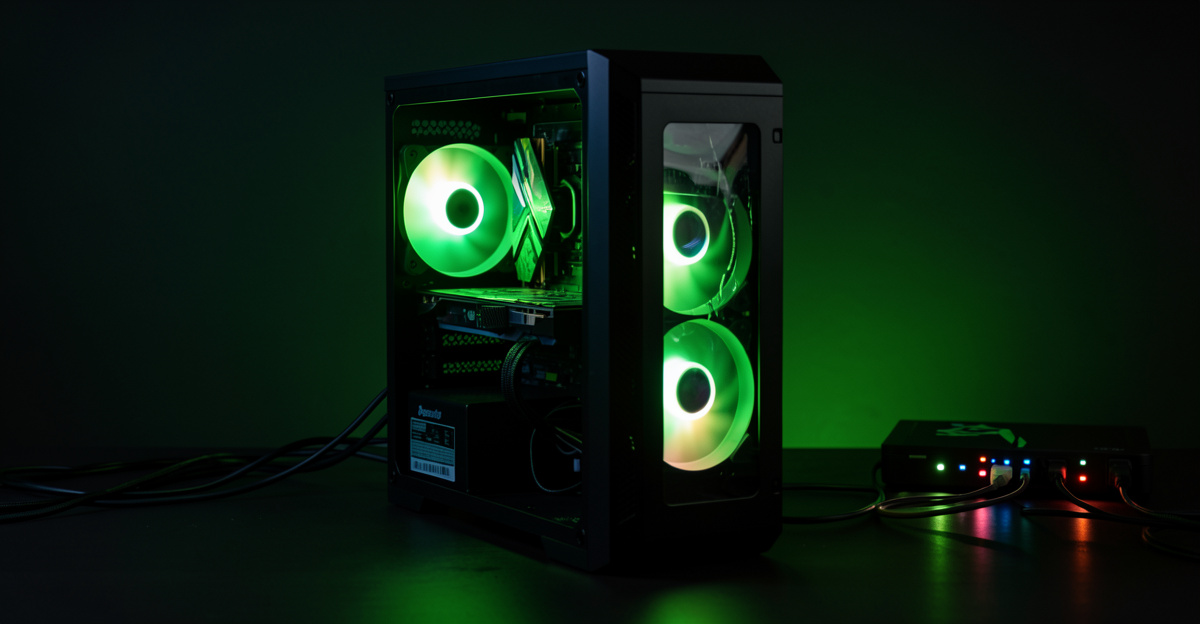
Local models operate without data traversing over a network. Using tools like Ollama, you can run LLAMA3, Qwen, Mistral, and similar models directly on your local machine or internal servers.
Cost Structure
Cloud API costs are based on token usage. While occasional use isn’t a big deal, increasing batch processing causes linearly rising expenses.
For example, setting up a pipeline that summarizes 1,000 news articles daily:
- Based on GPT-4, roughly 1,000 tokens input + 500 tokens output per article
- 30,000 articles processed per month → 30M input tokens + 15M output tokens
- Estimated monthly cost in early 2026: around $150–$300
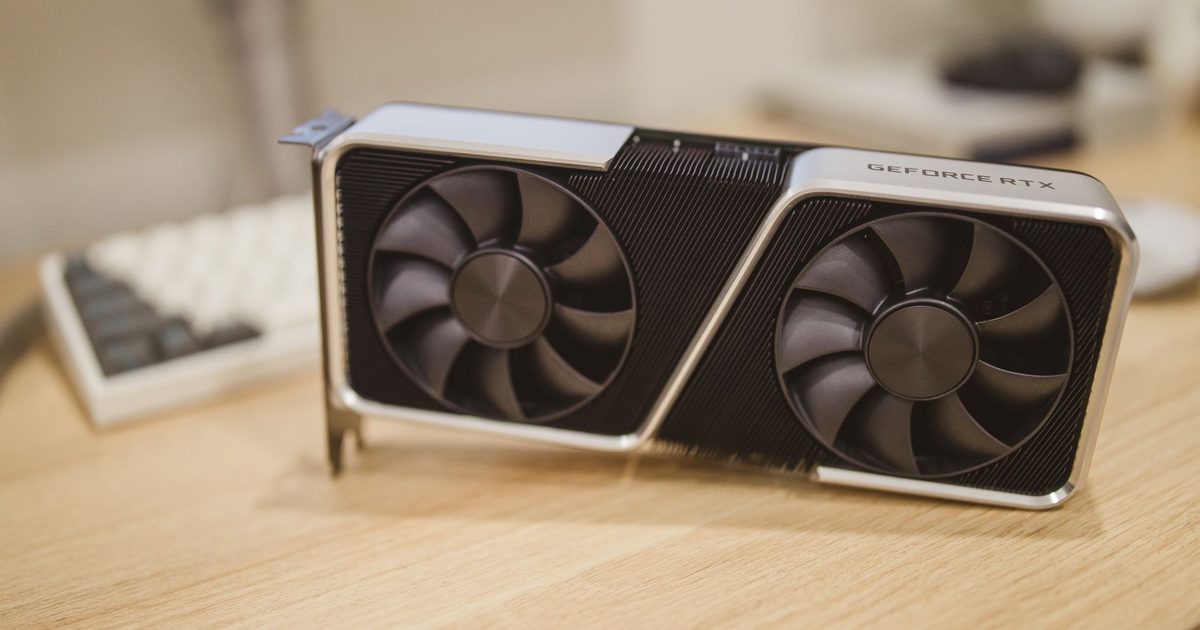
Local models involve upfront GPU costs but incur no additional expenses once set up. If you already own GPUs, operating locally is effectively free.
Cloud solutions, meanwhile, require no maintenance and can be upgraded to the latest models immediately.
Inference Quality: Honestly
For complex reasoning and long document analysis, cloud models are still superior.
GPT-4 or Claude 3.5 Sonnet significantly outperform 7B–13B local models in debugging complex code, multi-step reasoning, and analyzing lengthy reports—with this being factual.
Among local models, Llama3-70B or Qwen2.5-72B are roughly on par with cloud models, but running a 70B model locally requires at least one A100 GPU.
For models below 14B, they suffice for simple tasks like text classification, summarization, or code completion, but may fall short on complex reasoning or long-context inference.
Workflow Automation Perspective
In quantitative research, there are generally two ways to use LLMs:
1. Interactive Use: Asking the model questions during research, getting draft code, and reviewing ideas. Because quality matters here, cloud models are advantageous.
2. Batch Processing in Pipelines: Automating tasks such as news classification, document summarization, or factor generation by calling models programmatically. In these cases, costs, latency, and security make local models more favorable.
Running local models with Ollama + LangChain is currently the most convenient approach.
from langchain_ollama import OllamaLLM

model = OllamaLLM(model="qwen2.5:14b")

# Sentiment classification of news articles
def classify_sentiment(text: str) -> str:
    prompt = f"""Classify the market sentiment of the following financial news.
Answer only with [Positive/Negative/Neutral].

News: {text}
Sentiment:"""
    return model.invoke(prompt).strip()
When using cloud models, it’s recommended to design your code to switch models seamlessly using LangChain or the Anthropic SDK, without changing the core code.
Conclusion: Use According to Purpose
It’s not about choosing one over the other, but rather deploying both as needed.
| Situation | Recommended Approach |
|---|---|
| Handling sensitive internal data | Local model |
| Large batch pipelines | Local model (cost savings) |
| Complex reasoning or code generation | Cloud model |
| Interactive research support | Cloud model |
| Rapid prototyping | Cloud model |
If you lack GPU servers, cloud API usage remains the primary option. With GPUs, you can run batch processing locally and use the cloud only when high-quality inference is required, managing costs effectively.
One more thing: Regardless of the model, prompt engineering accounts for approximately 80% of results. Investing more time in structuring prompts is more impactful than choosing models.
Recommended Additional Reads
What Is an LLM Agent? An Easy Guide to Concepts and Quant Investment Applications
RunPod vs Vast.ai: Practical Comparison of Local LLM and GPU Rental for Backtesting
Bitcoin News Sentiment Analysis: Tools for Reading Market Psychology and Investment Use